
The Unseen Thermostat: Singapore’s Urban Heat Island Effect
For generations, the humble HDB void deck has been more than just a space beneath a block of flats; it’s been the pulsating heart of Singaporean community life. From lively wedding banquets to solemn funeral wakes, impromptu badminton games, and casual chats among neighbours, these open-air spaces have fostered the unique ‘kampung spirit’ that defines our social fabric. But as Singapore grapples with an escalating Urban Heat Island (UHI) effect, these beloved void decks are quietly transforming from cool havens into uncomfortable heat traps, subtly eroding the very community bonds they once nurtured.
What is the Urban Heat Island Effect?
The UHI effect is a phenomenon where urban areas experience significantly higher temperatures than surrounding rural areas. In a densely built city-state like Singapore, concrete, asphalt, and high-rise buildings absorb and retain heat, while a lack of green spaces and constant human activity (think air-conditioners expelling hot air) contribute to a relentless rise in ambient temperatures. This isn’t just about feeling a little warmer; it’s about a fundamental shift in our living environment.
The Void Deck: From Cool Retreat to Heat Trap
Historically, void decks, with their natural ventilation and shaded positions, offered a respite from the tropical sun. They were natural gathering points, especially for the elderly seeking cooler air and children playing safely away from traffic. Today, however, many void decks, particularly those surrounded by dense concrete structures, can feel stifling. The heat absorbed by surrounding buildings radiates outwards, trapping warm air and making these once-breezy spaces increasingly uncomfortable.
This transformation has profound social implications. When void decks become too hot, residents naturally retreat indoors, seeking the comfort of their own air-conditioned homes. The casual, spontaneous interactions that once defined void deck life are becoming less frequent. The elderly, who are more vulnerable to heat stress, may find it harder to socialize in these communal areas, leading to increased isolation. The ‘void’ in the void deck is no longer just an architectural feature; it’s becoming a social reality.
Reclaiming Our Spaces: The Role of Portable Cooling
As we adapt to this warmer reality, finding ways to reclaim our community spaces is crucial. While long-term urban planning and greening initiatives are essential, immediate solutions are also needed. This is where flexible cooling options come into play.
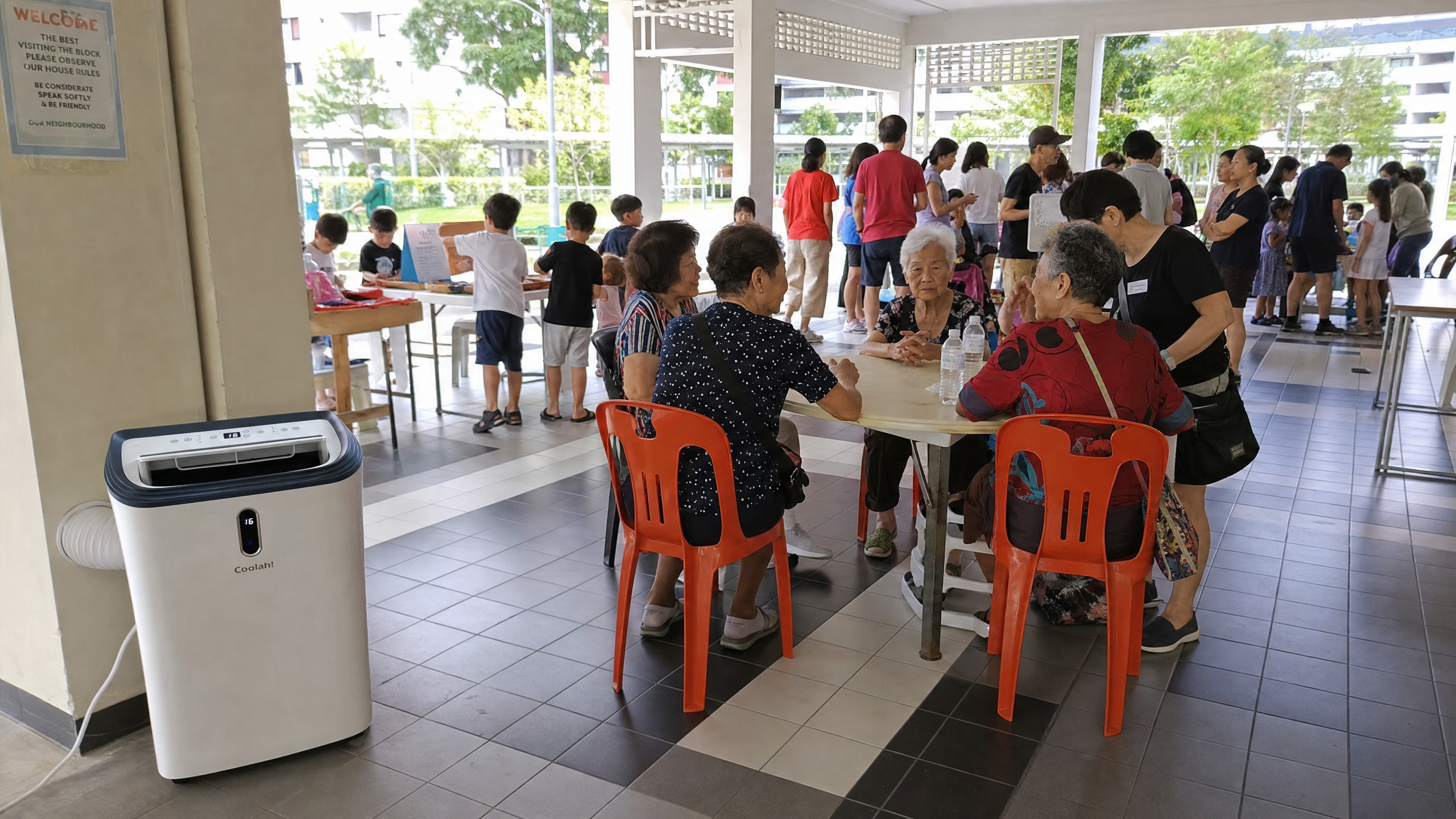
For events held in void decks—such as weddings, community gatherings, or even temporary exhibitions—relying solely on natural ventilation is often no longer sufficient. Portable aircon rentals offer a practical way to temporarily cool these spaces, ensuring that community events can proceed comfortably despite the rising temperatures. By strategically placing portable units, organizers can create ‘cool zones’ within the void deck, encouraging people to gather and interact without succumbing to the heat.
A Cooler Community Future
The challenge of the UHI effect requires a multifaceted approach. While we continue to explore sustainable urban design, we must also adapt our immediate environment to preserve our social fabric. By recognizing the changing climate of our void decks and implementing practical cooling solutions when needed, we can ensure that these spaces remain the vibrant heart of our communities for generations to come. After all, the true spirit of Singapore isn’t just found in our buildings, but in the connections we share within them.