
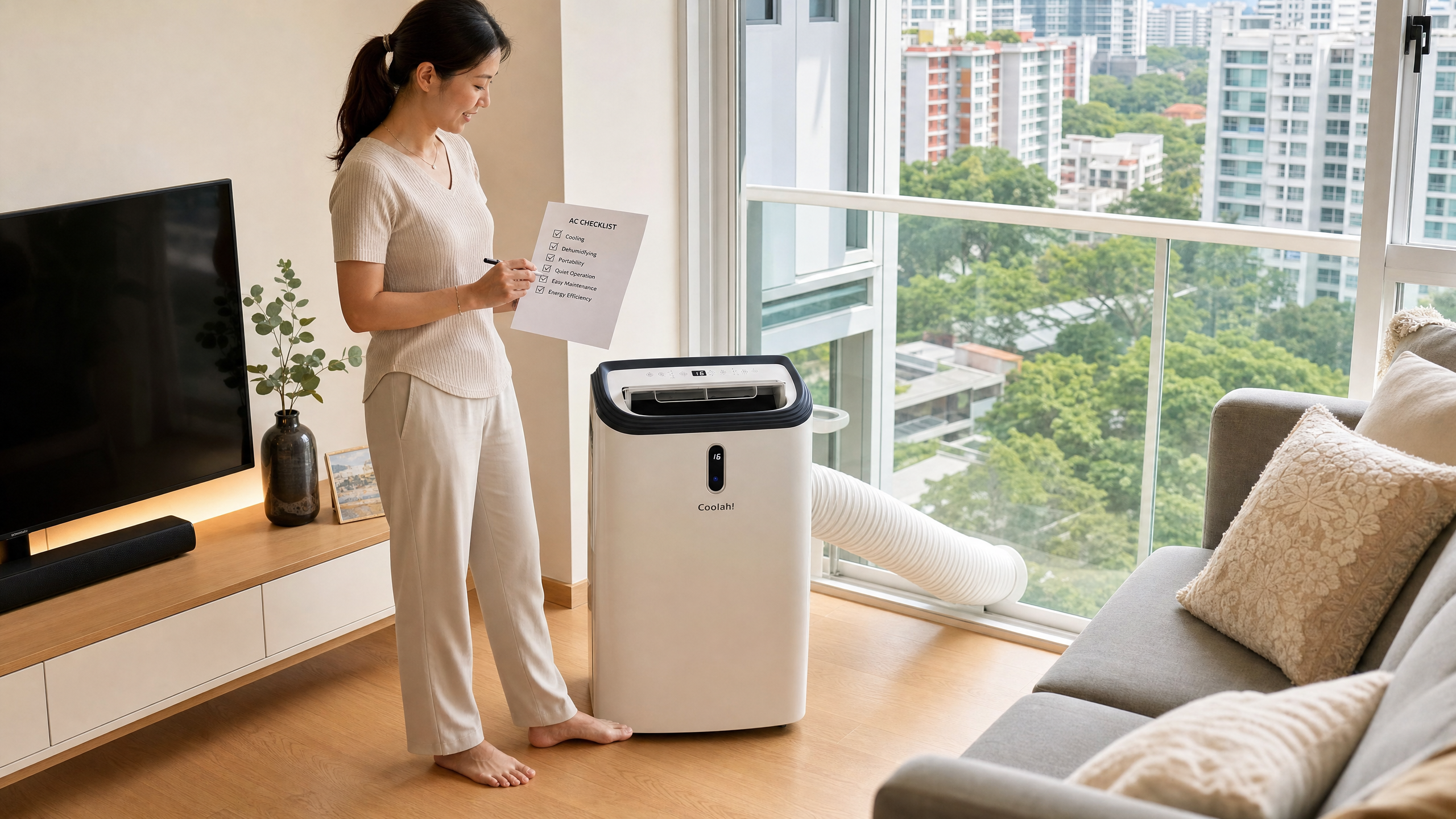
Whether you are dealing with an unexpected aircon breakdown, living in a rental property, or simply need extra cooling for your home office, choosing the right portable aircon can make a significant difference. Here is a comprehensive guide to help you make the best choice for your needs.
When the weather in Singapore turns hot and humid, having a reliable cooling solution becomes essential. While traditional split air-conditioning systems are common, portable air-conditioners have become increasingly popular for their flexibility, convenience, and lower upfront costs.
1. Understanding Cooling Capacity (BTU)
The most critical factor in choosing a portable aircon is its cooling capacity, measured in British Thermal Units (BTU). A higher BTU rating means the unit can cool a larger space. For a typical Singaporean bedroom (around 150 to 200 square feet), a unit with 9,000 to 12,000 BTU is generally sufficient. However, if your room faces the afternoon sun or has poor insulation, you might want to opt for a higher capacity to ensure optimal comfort.
2. Energy Efficiency Matters
Given Singapore’s electricity tariffs, energy efficiency should be a top priority. Look for units with a good energy efficiency rating. While portable aircons are generally less efficient than split systems, advancements in technology mean newer models consume less power. Choosing an energy-efficient model not only helps the environment but also keeps your monthly utility bills in check.
3. Noise Levels
Portable aircons house all their components, including the compressor, in a single unit inside your room. This means they can be noisier than split systems. If you plan to use the unit in a bedroom or a home office where quietness is important, pay attention to the decibel (dB) rating. A noise level below 55 dB is considered reasonably quiet for a portable unit.
4. Ease of Installation and Portability
One of the main advantages of a portable aircon is its mobility. Check the weight of the unit and ensure it comes with sturdy caster wheels for easy movement between rooms. Additionally, consider the installation process. All portable aircons require a window venting kit to exhaust hot air outside. Ensure the included kit is compatible with your window type (sliding or casement) and is easy to set up.
5. Maintenance and Drainage
Portable aircons extract moisture from the air as they cool, which needs to be drained. Many modern units feature self-evaporating technology, which recycles most of the moisture to cool the internal coils, reducing the need for frequent manual draining. However, in Singapore’s high humidity, you may still need to empty the water tank occasionally. Look for models with easy-to-access drainage ports and washable air filters for hassle-free maintenance.
Why Renting Might Be Your Best Option
If you only need a portable aircon for a short period—such as during an aircon breakdown, a temporary stay, or a specific event—renting can be a smarter choice than buying. Renting from a reliable provider like Coolah ensures you get a high-quality, well-maintained unit without the long-term commitment or storage hassles. Plus, with Coolah, you benefit from rapid deployment and excellent customer service, ensuring you stay cool exactly when you need it.
Choosing the right portable aircon involves balancing capacity, efficiency, noise, and convenience. By considering these factors, you can find the perfect cooling companion for your Singapore home in 2026.