
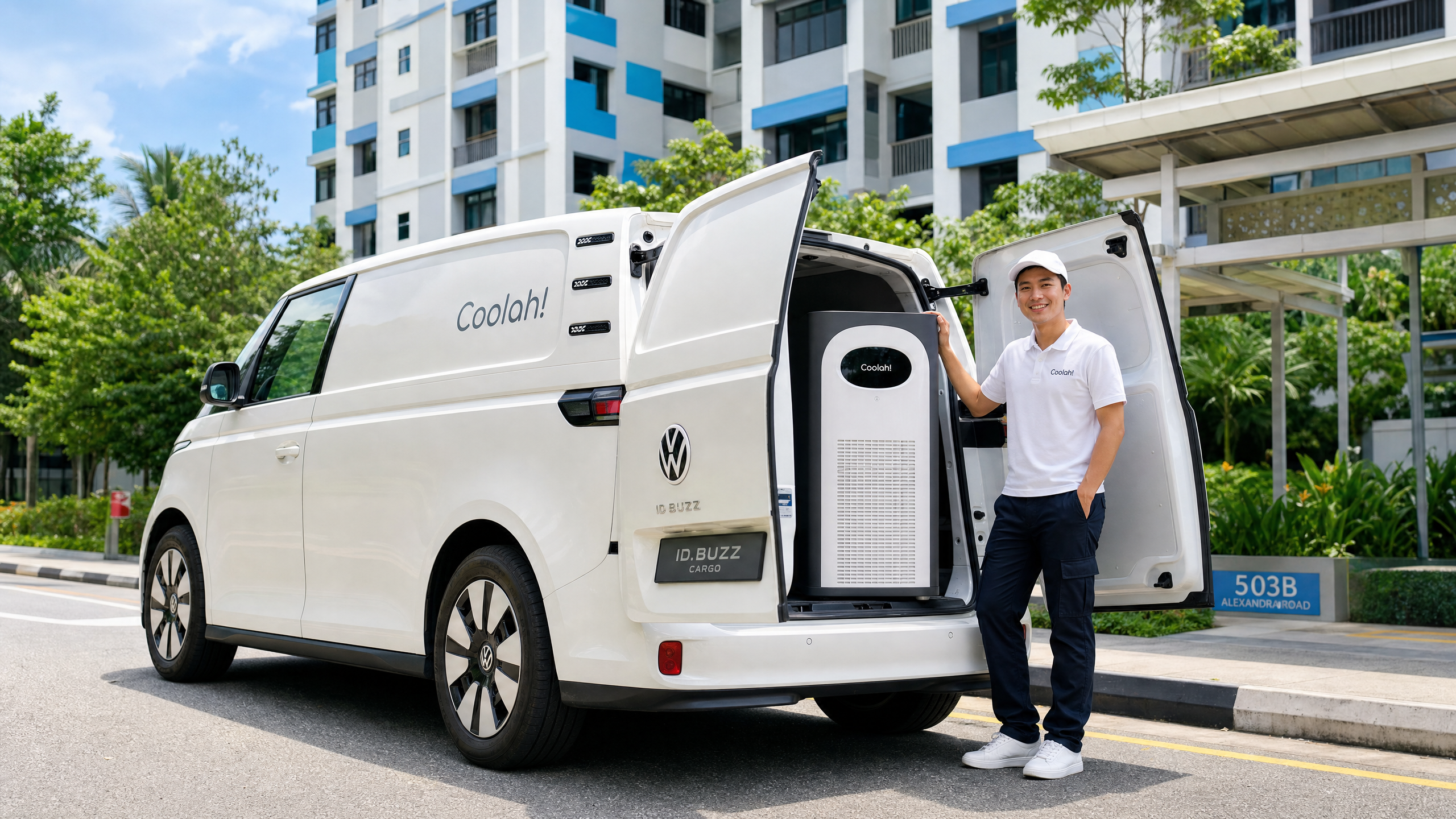
As the founder of Coolah.co, my mission has always been to bring comfort to Singaporean homes and businesses. But beyond just providing cool air, I believe in a deeper responsibility: to our environment, to our future generations, and to the collective well-being of our Lion City. This belief isn’t just a business strategy; it’s a personal conviction that led me to make a significant change in how Coolah operates: switching our delivery fleet to electric vehicles (EVs), specifically the Volkswagen ID Buzz Cargo.
The Unseen Footprint: Diesel vs. Electric in Singapore’s Urban Landscape
When I started Coolah, like many businesses, I considered the most practical options for logistics. Diesel vans and lorries are ubiquitous on Singapore’s roads, a common sight for deliveries. However, the environmental cost of these vehicles is substantial. Traditional internal combustion engine (ICE) vehicles, particularly diesel, are significant contributors to air pollution and greenhouse gas emissions. They release particulate matter, nitrogen oxides, and carbon dioxide, impacting air quality and accelerating climate change.
In contrast, electric vehicles offer a cleaner alternative. While the manufacturing process and electricity generation for charging EVs do have an associated carbon footprint, numerous studies, including those focused on Singapore, consistently show that EVs have a significantly lower lifecycle carbon footprint than their diesel counterparts. Singapore’s commitment to a greener future, outlined in the Singapore Green Plan 2030, includes ambitious targets for commercial vehicle electrification, aiming for 100% cleaner energy vehicles by 2040. This vision resonates deeply with Coolah’s values.
Consider the stark difference: a typical diesel light commercial vehicle (LCV) can emit upwards of 200–250 grams of CO₂ per kilometer. An equivalent EV, even accounting for Singapore’s energy mix, can reduce these operational emissions dramatically—producing around 60–70 grams of CO₂ per kilometer, a reduction of over 70%. This isn’t just a number; it’s a tangible reduction in the pollution we contribute to our city’s air and the global climate.
Beyond the Road: Our Responsibility for the Portable Aircon’s Footprint
My commitment to sustainability extends beyond just our delivery vans. I recognize that portable air conditioners, while providing essential comfort, also have an environmental footprint. This includes the energy consumed during operation and the refrigerants used. A traditional air conditioner can contribute significantly to CO₂ emissions over its lifespan, with estimates ranging from 10–20 tonnes of CO₂ over a decade.
This is why Coolah is dedicated to providing energy-efficient portable aircon units and educating our customers on responsible usage. By choosing an EV for delivery, I’m not only minimizing our operational impact but also taking responsibility for the entire service chain—from the moment a Coolah unit leaves our warehouse to its operation in your home, and eventually, its return. It’s about ensuring that the comfort we provide doesn’t come at an undue cost to the planet.
Leading by Example: A Founder’s Pledge to a Sustainable Future
As a founder, I believe it’s crucial to lead by example. While competitors might opt for the conventional, diesel-powered route, my decision to invest in an EV fleet for Coolah is a testament to our unwavering commitment to environmental stewardship. It’s a statement that profitability and sustainability are not mutually exclusive; they are, in fact, deeply intertwined.
This isn’t just about compliance or chasing trends. It’s about building a business that aligns with my personal values and contributes positively to the community and the environment. Every delivery made by a Coolah EV is a step towards cleaner air, a reduced carbon footprint, and a healthier Singapore for our children and grandchildren.
Join us in this journey towards a cooler, greener future. Choose Coolah, and choose a partner who cares.